The UPSKILLS summer school
Petnica Science Center, Serbia (15-20 July 2023)
WHAT
The summer school will bring together highly-motivated students and lecturers in a hands-on, research-oriented 5-day program. Through lectures, workshops, and practical tasks, you will learn about the skills required by the job market – both in academic positions and in companies that make language their main business.
WHY
The aim of the UPSKILLS project is to identify and tackle the gaps in digital and research skills in existing programmes of study and develop supporting teaching and learning materials that incorporate aspects of gamification and educational games.
WHEN
The event will take place 15-20 July 2023.
WHERE
This is an onsite event which will take place at Petnica Science Center in Serbia.
CALL FOR APPLICATIONS (closed)
Are you a future language specialist – a student of a language-related subject, such as linguistics, foreign languages, language pedagogy, translation & interpreting?
Do you want to know more about your career prospects as a language specialist?
Would you like to better prepare for the future job market in language-related sectors?
We invite you to apply for the UPSKILLS 2023 Summer School!
The summer school will bring together highly-motivated students and lecturers in a hands-on, research-oriented 5-day program. Through lectures, workshops, and practical tasks, you will learn about the skills required by the job market – both in academic positions and in companies that make language their main business.
Following a general introduction to a number of much-needed transversal skills, including analytical/scientific thinking, problem-solving, and project management, you will work closely with experienced trainers and other students on small-scale practical research tasks related to language data collection, processing, analysis, sharing, and much more. Toward the end of the program, you will have a chance to present the results of the tasks you worked on and discuss your learning experiences with the lecturers. Throughout the program, the focus will be on real-world scenarios and enhancing students’ awareness of the current job market and employment opportunities.
This call is open to students enrolled at universities that are part of the UPSKILLS project consortium – specifically, the University of Belgrade, the University of Bologna, the University of Graz, the University of Malta, and the University of Rijeka. Preference will be given to Bachelor’s students, but Master’s students are also welcome to apply. The program will be conducted in English.
The summer school will take place in Serbia, at Petnica Science Center from 15 to 20 July 2023.
All travel and subsistence costs will be covered for the selected students (six per participating institution). Accommodation will be arranged directly on campus. Participants are responsible for their health/travel insurance and potential visas and visa fees.
Apply using this form (closed)
The deadline for applications is in March/April – for specific dates and additional conditions, please check the call on your university website:
For students from the University of Belgrade
For students from the University of Bologna
For students from the University of Graz
For students from the University of Malta
For students from the University of Rijeka
Candidates will be informed about the selection results within two weeks after the application deadline.
Schedule for participants
NB: The timetable will also include 15 min breaks which will be directly allocated by your trainers, depending on the project you are assigned to.
Sat 15/07
Sun 16/07
Mon 17/07
Tue 18/07
Wed 19/07
Thu 20/07
9.30 - 10.00
Breakfast
Breakfast
Breakfast
Breakfast
Breakfast
Breakfast
10.00 - 11.00
Introductions¹
Lectures and blended work (with breaks)
Lectures and blended work (with breaks)
Lectures and blended work (with breaks)
Student showcase preparation
Feedback and closing
11.00 - 12.00
Getting to know each other; more details on the program²
12.00 - 13.00
1st Transversal skills workshop³
Select students to take part in focus group on UPSKILLS games
13.00 - 14.00
Packing up
14.30 - 15.00
Lunch
Lunch
Lunch
Lunch
Lunch
Lunch
15.00 - 16.00
15.15 - 17.15: 2nd transversal skills workshop³
Individual/group work (with breaks)
Individual/group work (with breaks)
Individual/group work (with breaks)
---
---
16.00 - 17.00
Student showcase presentations
---
17.00 - 18.00
17.30 - 18.15: Find your place in the language industry!⁴
---
18.00 - 19.00
18.15 - 19.00: Time to play an UPSKILLS game!⁵
---
19.00 - 20.00
19.15 - 20.00: Introduction to practical tasks⁶
---
---
---
---
20.30 - 21.00
Dinner
Dinner
Dinner
Dinner
Dinner
Dinner
¹ Session led by Jelena Gledić & Stavros Assimakopoulos
² Session led by Jelena Gledić
³ Workshop trainers: Jelena Budimirović Milićević, Maja Đukanović, Jelena Gledić & Maja Miličević Petrović
⁴ Session led by Maja Miličević Petrović
⁵ Session led by Michela Vella & Stavros Assimakopoulos
⁶ Short introductions to practical tasks by the trainers
Practical task descriptions*
* All students have been allocated into the one of the following groups based on their original applications:
- Collecting language data from human participants
You will be presented with the core aspects of the methods and tools for collecting language data from human participants, but also with a pool of empirical phenomena suitable as research topics. Under close individual and group supervision you will choose a topic (e.g. the effect of collective vs. distributed predicates on the agreement of the verb with numeral phrases in BCMS), select a suitable method (e.g. elicited production), design a small-scale study (formulate a research question, specify conditions, prepare stimuli, plan data analysis) and prepare a presentation.
The presented topics will come from the areas of morphophonology/morphosyntax, second language acquisition and sociolinguistics.
Your trainers: Boban Arsenijević, Tihana Kraš, Martina Podboj, Marko Simonovic, Jelena Živojinović
- Language Variation: investigating double object constructions
This project focuses on theory, particularly on the problem represented by double object constructions which are possible in typologically unrelated languages. First, you will learn why this empirical phenomenon poses interesting theoretical issues, and study the two main analyses that have been proposed in the literature. Then, you will be guided through the evaluation of the two approaches by looking at a corpus of English, a language that notoriously allows double object constructions. Besides learning the key theoretical concepts, by the end of the summer school, you are expected to have acquired some basic notions of text processing and statistics. Moreover, you will be asked to summarize and explain you conclusions and the process that led you to them in a poster.
Your trainers: Margherita Pallottino, Genoveva Puskas, Michela Vella
- Computer programming for language students
You will use the programming concepts learned in class to make a hangman game. Hangman is simple enough to be implemented with little programming knowledge whilst still including language related aspects. A large text file of words will be used to choose a word to be guessed. In doing so, you will develop skills in reading text files, input/output, loops and conditions, as well as text searching and manipulation.
Your trainers: Kurt Abela, Andrew Emanuel Attard
- Text processing: building, sharing and archiving corpora
In this project strand your final aim is to learn to design, compile, share, archive and analyse corpora (systematic, documented collections of texts for linguistic analysis and re-use by other researchers). For your final project you will describe the similarities and differences in meaning and evaluation conveyed by a set of near synonyms in a language of your choice, on the basis of a corpus you will collect and process. In preparation for this task, you will learn the basic notions, methods and tools involved in the creation and use of corpora. Topics to be covered in the lessons and practical sessions include:
– corpus construction: sampling frames, text selection, documentation.
– corpus annotation: metadata and morphosyntactic tagging.
– corpus analysis: co-occurrence and frequency data; simple and advanced querying; corpus comparison.
– corpus sharing and archiving: research infrastructures, research data repositories, FAIR principles.
Your trainers: Silvia Bernardini, Adriano Ferraresi, Iulianna van der Lek
Meet the trainers:
Stavros Assimakopoulos
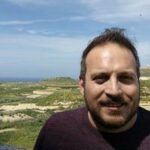 I am an Associate Professor at the Institute of Linguistics and Language Technology of the University of Malta. My research lies at the interface of linguistics with philosophy, cognitive psychology and critical theory. I am the leader of the UPSKILLS project, and my interest in digital skills revolves mainly around the compilation and analysis of corpora for linguistic and social-scientific research. I have written numerous papers in the fields of pragmatics and (critical) discourse studies and I am currently serving as Special Issues Editor of the Journal of Pragmatics and Reviews Editor of the CADAAD Journal.
Silvia Bernardini
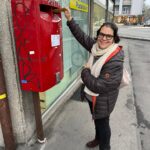 I have taught translation (from English into Italian), English linguistics and corpus linguistics for over 25 years at the Department of Interpreting and Translation of the University of Bologna at Forlì, Italy. My research interests are related to lexis and phraseology, ‘constrained’ language production, language learning and teaching, and translator education. I am fascinated by the interaction of languages and technology, and believe that artificial and human intelligence should work together to concretely improve all lives, particularly those who need it the most. Apart from UPSKILLS, my most cherished project at the moment is SLIT (Service Learning, Innovation, Translation), an international cooperation project funded by the University of Bologna and involving the universities of Nairobi (Kenya) and Gaston Berger de Saint Louis (Senegal), aiming to develop professional communities and practices around the translation of under-resourced languages.
Michela Vella
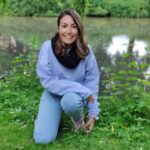 I am a researcher and doctoral student at the Institute of Linguistics and Language Technology at the University of Malta. My PhD research is entitled ‘Maltese First Language Acquisition’, with a specific focus on morpho-syntax and psycholinguistics analytical approaches. My research interests are first and second language acquisition, psycholinguistics, language typology and variation, morpho-syntax and Maltese linguistics.
Martina Podboj
 I am a Research Fellow at the Department of English Studies, Faculty of Humanities and Social Sciences, University of Rijeka. I hold a dual MA in Croatian and English (University of Osijek, Croatia), and a PhD in Linguistics (University of Zagreb, Croatia). I conducted my doctoral research as a Doctoral Research Fellow at the University of Alberta, Canada (2017-2018). I specialize in discourse analysis, sociolinguistics, and second language acquisition and teaching. My main research interests are narrativity and identity construction in various genres such as narratives about migration; social media discourse; and teaching foreign languages to vulnerable groups. I am currently a part of the Erasmus+ UPSKILLS (UPgrading the SKIlls of Linguistics and Language Students) consortium and an active member of the LITHME (Language In The Human-Machine Era) COST action (Working Group 6: Ideologies, beliefs, attitudes).
Tihana Kraš
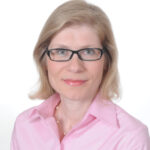 I am an Associate Professor in the Department of English Language and Literature in the Faculty of Humanities and Social Sciences at the University of Rijeka, Croatia. I obtained my MPhil in English and Applied Linguistics and my PhD in Second Language Acquisition from the University of Cambridge, United Kingdom. I am a developmental linguist and psycholinguist and my research and teaching focus on first and second language acquisition and processing. My expertise is in quantitative, especially experimental, research methods. I am Co-Editor of the Studies in Bilingualism book series. I have led and been involved in numerous research projects and am currently Team Coordinator on two Erasmus+ projects: UPgrading the SKIlls of Linguistics and Language Students (UPSKILLS) and Teacher Education About Multilingualism (TEAM). I am Director of Bilingualism Matters@Rijeka, a branch of the Bilingualism Matters not-for-profit organisation, the aim of which is to communicate research findings about bilingualism and language learning to the wider public.
Maja Đukanović
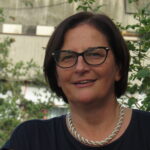 I have worked at the Faculty of Philology, University of Belgrade since 1989, first as an assistant, then from 2005 as an assistant professor, then professor lecturer from 2010, and a full professor of the Slovenian language since 2015. My fields of interest are: comparative Serbian-Slovenian grammar, translation theory and teaching of Slovenian as second/foreign language. I am the author and co-author of a number of scientific papers and articles in scientific journals, of a grammar of Slovenian, and Serbian-Slovenian and Slovenian-Serbian dictionaries. I participate as a researcher in different projects and actively participate at conferences and workshops in Serbia and abroad, and have been a visiting professor abroad at several European universities. I have published my work in internationally acclaimed scientific publications. I have also translated a wide variety of texts from Serbian into Slovenian and vice versa.
Adriano Ferraresi
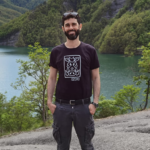 I am an Associate Professor in English Language and Translation at the University of Bologna, and a member of the Board of the Doctorate in Translation, Interpreting and Intercultural Studies of the same University. I have a Doctorate in English for Special Purposes from the University of Naples “Federico II”. My main research interests are in the field of construction of linguistic resources, and I have been involved in several collaborative corpus construction projects, including the EPTIC initiative and the Eurolect Observatory. On the more descriptive side, my work focuses on phraseology and terminology in native, translated and lingua franca varieties of English, which I explore combining corpus linguistics techniques and statistical methods. I teach an MA module on translation technologies.
Iulianna van der Lek
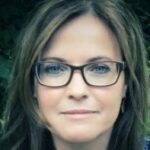 I am a Training and Education Officer at CLARIN ERIC. In this role, I am working closely with the CLARIN community to ensure that the training and resource activities relevant to the humanities and social sciences disciplines are developed according to the FAIR principles for scientific data management. In addition, I am coordinating CLARIN’s activities in the UPSKILLS project. In the past, I worked as a terminologist, technical writer and lecturer in Computer-Aided Translation and Terminology Management. Besides teaching, I have experience in optimising and developing training programs for both students and professional translators. Finally, I have been involved in community projects, such as the development of the Language Technology Wiki, Translation Commons and I am also a member of the JIAMCATT Liaison Committee at the European Commission. You can find out more by having a look at my LinkedIn profile.
Maja Miličević Petrović
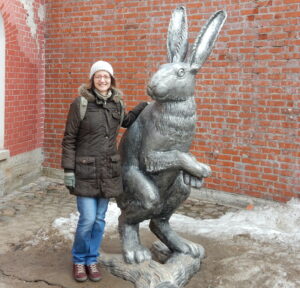 I teach general linguistics, second language acquisition and data analysis in the Department of Interpreting and Translation of the University of Bologna at Forlì. I first started studying languages because I wanted to be a translator, but I ended up doing a bit of translation and a lot of linguistics, discovering along the way that I also like statistics. I am interested in graded language phenomena, and in comparing different types of speakers, especially bilinguals. I enjoy solving methodological puzzles and try to stress the importance of method in everything I do.
I was/am active in ReLDI, a predecessor of UPSKILLS.
Marko Simonović
 I am currently employed as a research fellow at the University in Graz, where I am mainly involved in the research project “Hyperspacing the Verb: The interplay between prosody, morphology and semantics in the Western South Slavic verbal domain”. I obtained my MA and PhD from Utrecht University and have since taught and performed research at the universities of Utrecht, Nova Gorica and Graz. My main areas of research are phonology, prosody, morphology and morphosyntax, language contact and normativity. Most of my work focuses on Slovenian and Bosnian / Croatian / Montenegrin / Serbian, but I have also worked on Dutch and colonial Venetian. I am passionate about understanding the ways in which parts of the language faculty (phonology, syntax, lexicon, but also social awareness and normativity) interface with each other to produce the complex behaviour that we call language.
Jelena Živojinović
 I am a historical linguist working in the domain of Romance and Slavic languages. My interests include morphosyntax, polar bears and cold winters. I used to live in the Arctic, but I am currently enjoying the mild Styrian weather in Graz.